
Where to Invest $500K: Dubai vs Istanbul vs Miami
Three cities. Three entirely different investment propositions. And for a foreign investor sitting with $500,000 to deploy into real estate, the choice between Dubai, Istanbul, and Miami in 2026 is more consequential and more nuanced than most comparison guides suggest.
Each of these markets is genuinely compelling. Each has a credible bull case. And each carries risks and structural realities that most agents in those markets prefer not to emphasize. This guide does not have a pre-determined winner. It compares all three honestly, across the metrics that actually determine whether your investment performs over a five to ten year horizon.
By the end, you will have a clear framework for which market — or combination of markets — fits your goals, risk profile, and personal circumstances in 2026.
The Investment Profiles: What Each City Actually Offers
Before running numbers, it helps to understand what you are actually buying when you invest in each market.
Dubai is a zero-tax, high-liquidity market with strong yield, full foreign ownership rights, and a rapidly growing population. It is the most straightforward market for foreign investors from a regulatory standpoint — entry is clean, rental income is untaxed, and the legal framework is designed to attract international capital.
Istanbul is a high-yield, currency-risk market with a unique citizenship benefit attached to qualifying investments. The Turkish Lira’s structural weakness creates an interesting dynamic: acquisition costs are compressed in dollar terms while rental income from international guests holds in harder currencies. Istanbul also offers something Dubai and Miami cannot — a direct citizenship pathway tied to the same investment.
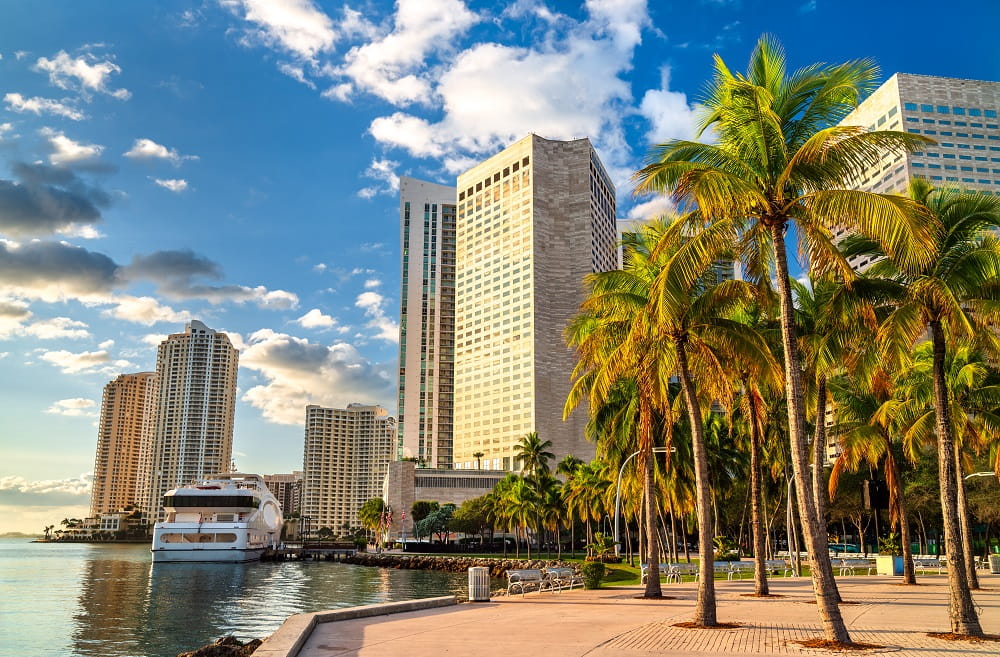
Miami is a dollar-denominated, capital-appreciation market with the strongest long-term institutional foundation of the three. It offers the deepest liquidity, the most mature financing options, and the security of US legal infrastructure. The trade-off is lower yields and a significantly higher tax burden compared to the other two cities.
Yield Comparison: Where Does Your $500K Actually Earn?
Yield is where the three cities diverge most sharply.
Dubai: Average gross rental yield for apartments sits in the 6.5% to 8% range citywide, with the best-performing areas — Jumeirah Village Circle, Dubai Marina, and International City — delivering 7% to 9%. Short-term rental properties in prime tourist zones push toward 10% to 12% gross. Net yields after service charges, management fees, and maintenance typically run 1% to 2% below gross figures. Dubai’s critical advantage here is zero income tax on rental earnings — every dirham of net yield stays in your pocket.
Istanbul: Short-term rentals in Istanbul’s best districts generate gross yields of 10% to 14%, with a typical long-term rental sitting around 7% citywide. The uplift from short-term strategy is 3 to 6 percentage points — one of the widest spreads of any major city globally. Net yields are approximately 1.5% to 2.5% below gross after accounting for building fees, earthquake insurance, and property tax. Rental income is subject to Turkish income tax, though non-residents benefit from a TRY 47,000 annual exemption, and progressive rates apply above that threshold.
Miami: Long-term rental yields in Miami average 4% to 6% gross depending on neighborhood and property type. Short-term rental performance varies significantly by micro-location and building rules — some South Florida markets generate 10% to 18% gross through Airbnb and VRBO on premium properties, though regulatory restrictions on short-term rentals are tightening across several Miami municipalities. HOA fees, property insurance (which has risen sharply in Florida since 2022), and federal and state tax obligations erode net yields considerably. Realistic net yields for most foreign investors in Miami fall in the 3% to 5% range.
Yield verdict: Istanbul leads on gross yield potential, Dubai leads on after-tax net yield efficiency, Miami trails on yield but leads on capital appreciation stability.

Tax Environment: The Number Most Investors Underestimate
Taxes are not the most exciting part of an investment comparison, but they are often the variable that determines whether a market that looks good on paper actually delivers after ten years.
Dubai:
No income tax on rental earnings. No capital gains tax on property sales. No annual wealth tax. Service charges and the Dubai Land Department transfer fee (4% of purchase price) are the primary costs at entry. Running costs thereafter are lean. This is the most tax-efficient environment of the three markets by a significant margin.
Istanbul:
No capital gains tax for foreign sellers after five years of ownership. Rental income is taxable, with a TRY 47,000 annual exemption and progressive rates above that. Title deed transfer fee is 4% of declared purchase value. Annual property tax (Emlak Vergisi) runs 0.1% to 0.4% depending on property type and location. Overall, a moderate tax environment — better than most European markets, but not as clean as Dubai.
Miami:
Federal income tax on rental income applies at ordinary income rates for foreign investors, typically 30% flat withholding unless a tax treaty applies or the investor files as a non-resident alien with a US tax ID. Florida has no state income tax, which is an advantage over New York or California. Capital gains tax applies on sale — long-term rates for foreign investors range from 15% to 20% plus the FIRPTA withholding requirement (15% of sale price withheld at closing).
Property insurance has doubled in parts of Florida since 2022, adding meaningfully to annual running costs. HOA fees in Miami luxury condos often run $1,000 to $3,000 per month. The total tax and cost burden in Miami is the heaviest of the three markets.
Tax verdict:
Dubai is the clear winner. Istanbul is manageable. Miami requires careful tax planning and a realistic model of total ownership costs.
Entry Costs and What $500K Actually Buys
Dubai: $500,000 in Dubai buys a well-positioned 1 to 2 bedroom apartment in a mid-market community with strong rental demand — Jumeirah Village Circle, Business Bay, or Dubai South. At this price point, you are buying into an established rental ecosystem with professional property management infrastructure. Transaction costs are transparent: 4% DLD fee plus agent commission of roughly 2%. Total entry cost on a $500,000 purchase: approximately $530,000 all in.
Istanbul: $500,000 in Istanbul at current dollar-to-lira rates puts you in the upper segment of the market — well above the $400,000 citizenship threshold, which means this investment qualifies you for Turkish citizenship. You are looking at well-located apartments in Beşiktaş, premium units in Beyoğlu, or new-build luxury in Başakşehir. Total acquisition costs (title deed fee 4%, valuation report, legal fees, translation, land registry) add approximately 8% to 10% on top of the purchase price. Total entry cost on a $500,000 purchase: approximately $540,000 to $550,000.
Miami: $500,000 in Miami buys a mid-market condo in neighborhoods like Brickell, Edgewater, or Wynwood — areas with genuine rental demand but not the top end of the market. Closing costs in Florida for foreign buyers typically run 3% to 5%, but HOA reserves, attorney fees, title insurance, and FIRPTA planning add further complexity. If you intend to finance part of the purchase, foreign national mortgage programs are available but carry higher rates than domestic buyers receive. Total entry cost on a $500,000 purchase: approximately $520,000 to $530,000, not counting ongoing HOA obligations.

Citizenship and Residency: The Hidden Value Layer
This is where Istanbul separates itself from the other two cities in a way that matters enormously to a specific profile of investor.
Istanbul: A $400,000+ property purchase in Turkey qualifies for citizenship by investment. The process takes 6 to 12 months, requires no physical residency, and delivers a full Turkish passport — not a residency permit. Turkish citizenship opens over 110 visa-free or visa-on-arrival destinations, and Turkish citizens are eligible for the US E-2 investor visa, a business immigration pathway unavailable to nationals of many countries. For investors who value a second passport alongside their property return, Istanbul is the only one of these three markets where the same $500,000 investment delivers both.
Dubai: The UAE Golden Visa is available to property investors above AED 2 million (approximately $545,000). A $500,000 investment sits just below this threshold. The Golden Visa grants 10-year renewable residency — not citizenship — with no path to UAE citizenship for most foreign nationals. It is valuable for investors who want to live and work in the UAE, but it is a residency product, not a citizenship product.
Miami: US property ownership confers no immigration benefit. There is no investor visa tied to residential real estate purchases in the United States. Significant US immigration pathways exist (EB-5 requires $800,000 minimum in targeted employment areas), but they are entirely separate from a $500,000 Miami property purchase.
Residency/citizenship verdict: Istanbul wins outright for investors who value a second passport. Dubai offers strong residency benefits at a slightly higher threshold. Miami offers no immigration benefit.
Capital Appreciation: Where Does Your Asset Grow?
Dubai: The Dubai market delivered strong appreciation through 2022 to 2024, with some areas recording 40% to 60% cumulative gains. In 2026, the market is entering a more mature phase — appreciation is moderating, supply is increasing, and the outsized gains of the boom years are unlikely to repeat in the near term. Long-term fundamentals remain solid: population growth, continued international inflow, and a government committed to economic diversification support steady appreciation.
Istanbul: Turkish real estate in USD terms has been volatile — Lira depreciation has historically eaten into dollar-denominated returns even when Lira-denominated prices rose sharply. However, Istanbul’s prime districts have held value well in dollar terms over five-year horizons, and investors who bought at the right entry point have seen meaningful dollar appreciation. The currency dynamic cuts both ways: it creates entry opportunities for dollar buyers but complicates exit calculations.
Miami: Miami’s long-term capital appreciation track record is the strongest of the three markets. The city’s structural tailwinds — domestic migration from high-tax states, Latin American wealth inflow, financial services sector growth — support consistent appreciation. Foreign buyers purchased $4.4 billion of South Florida residential real estate in 2025 alone. Average annual appreciation in prime Miami neighborhoods runs 3% to 7%, with some corridors outperforming significantly. For pure long-term wealth building in a stable currency, Miami’s appreciation story is compelling.
Appreciation verdict: Miami leads on long-term stability and dollar-denominated appreciation. Dubai offers strong near-term fundamentals. Istanbul offers potential but with currency risk embedded.

The Investor Profile Match: Which City Fits You?
Not every investor should choose the same market. Here is how to match your profile to the right city.
Choose Dubai if: You want the cleanest tax environment, strong yield without currency risk, and a straightforward investment process. Dubai is ideal for investors who prioritize cash flow efficiency and want a market with full foreign ownership, professional management infrastructure, and zero income tax friction.
Choose Istanbul if: You want the highest yield potential, a second passport attached to the investment, and you are comfortable with currency volatility in exchange for a structurally lower entry cost. Istanbul is ideal for investors who see the citizenship benefit as a significant part of the total value proposition, or who want to combine rental income with the immigration flexibility of a Turkish passport.
Choose Miami if: You want dollar-denominated assets with strong long-term appreciation, US legal system protection, and exposure to one of the world’s deepest and most liquid real estate markets. Miami is ideal for investors focused on generational wealth building, US market access, or who have existing US ties (family, business, travel frequency) that make owning there practically useful.
The $500K Comparison at a Glance
| Factor | Dubai | Istanbul | Miami |
|---|---|---|---|
| Gross yield | 6.5–8% (LTR) / 10–12% (STR) | 7% (LTR) / 10–14% (STR) | 4–6% (LTR) / up to 18% (STR) |
| After-tax net yield | 5–7% | 4–6% | 3–5% |
| Income tax on rent | None | Progressive (exemption applies) | 30% withholding (treaty-dependent) |
| Capital gains tax | None | None after 5 years | 15–20% + FIRPTA |
| Entry costs | ~6% | ~8–10% | ~5–7% |
| Citizenship benefit | Residency only (above $545K) | Full citizenship ($400K+) | None |
| Currency risk | Low (USD-pegged) | Medium–High | None |
| Long-term appreciation | Strong | Moderate (currency-adjusted) | Very strong |
| Legal simplicity | High | Medium | High |
Download Your Free 3-City Investment Comparison Report
NYC Consultancy operates across all three markets — Dubai, Istanbul, and Miami — and has guided investors from over 30 countries through property purchases in each city. We have prepared a free 3-City Investment Comparison Report for 2026 that includes detailed net yield projections, tax scenario modeling, sample property profiles at the $300K, $500K, and $1M price points, and a step-by-step process guide for each market.
Contact us through the NYC Consultancy website to request your copy, or book a free 30-minute consultation with our investment specialists to discuss which market — or combination of markets fits your specific situation. We do not have a preferred city to sell you. We have the expertise across all three to help you make the right decision for your goals.